

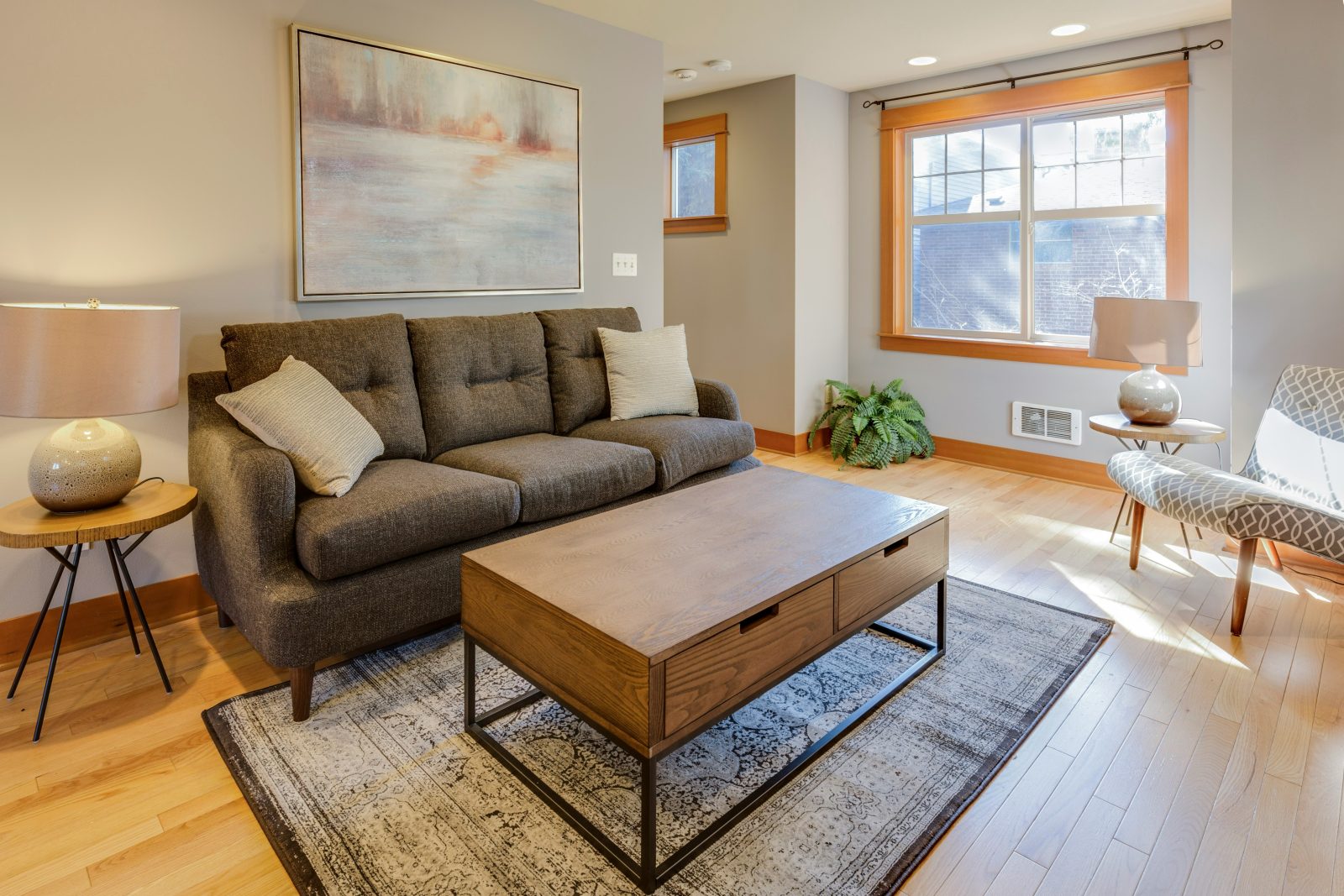

Small rooms can feel limiting, but with the right design choices, even the most compact spaces can appear open, airy and inviting. It’s not about knocking down walls or undertaking major renovations. Instead, it’s about using clever visual techniques, smart layouts and thoughtful styling to maximise what you already have.
Here’s how to make a small room look bigger using simple, effective design tricks.
Choose Light and Neutral Colours
Colour has a powerful effect on how we perceive space. Lighter shades such as whites, soft greys, beiges and pastels reflect more light, helping a room feel brighter and more open.
That doesn’t mean you have to avoid darker tones completely. When used strategically — such as on a feature wall or through accessories — they can add depth without overwhelming the space. The key is balance.
Use Mirrors to Create Illusion
Mirrors are one of the oldest and most effective tricks in interior design. By reflecting both natural and artificial light, they instantly make a room feel larger.
Position a mirror opposite a window to maximise light, or use a large statement mirror to create the illusion of added depth. Mirrored furniture and décor can also subtly enhance this effect without dominating the room.
Maximise Natural Light
Natural light is your best friend in a small space. Heavy curtains or dark blinds can block light and make a room feel closed in.
Opt for sheer curtains, light fabrics or even leave windows uncovered where privacy allows. Keeping window areas clear will help light travel further into the room, creating a more open feel.
Be Smart with Furniture Choices
Bulky, oversized furniture can quickly overwhelm a small room. Instead, choose pieces that are appropriately scaled and, where possible, multi-functional.
Furniture with exposed legs, such as sofas and chairs, allows you to see more of the floor, which helps create a sense of openness. Storage beds, ottomans and nesting tables are also great options for maximising functionality without adding clutter.
Create the Illusion of Height
Drawing the eye upwards can make a room feel taller and more spacious. There are several ways to achieve this:
- Hang curtains higher than the window frame
- Use tall shelving units
- Incorporate vertical stripes or patterns
- Choose slim, elongated lighting fixtures
These subtle tricks encourage the eye to move vertically, enhancing the perception of height.
Keep It Clutter-Free
Clutter is one of the fastest ways to make a room feel smaller. Too many items competing for attention can create visual chaos and reduce the sense of space.
Focus on keeping surfaces clean and organised. Invest in smart storage solutions that keep everyday items out of sight while still easily accessible.
Use Rugs to Define Space
It may seem counterintuitive, but a well-placed rug can actually make a room feel larger. The key is choosing the right size.
A rug that’s too small can make a space feel disjointed, while a larger rug that sits under key pieces of furniture helps unify the room and create a more expansive feel.
Stick to a Cohesive Colour Scheme
Using too many contrasting colours can break up a room visually, making it feel smaller. Instead, opt for a cohesive palette that flows throughout the space.
This doesn’t mean everything has to match perfectly, but keeping tones harmonious will create a more seamless and open look.
Make Use of Vertical Space
When floor space is limited, think upwards. Wall-mounted shelves, hooks and storage units free up valuable floor area while keeping the room functional.
Floating furniture, such as wall-mounted desks or bedside tables, can also help maintain a clean and uncluttered feel.
Let Flooring Flow
Consistent flooring throughout a room — or even across adjoining spaces — can make an area feel larger by creating visual continuity.
Avoid breaking up the floor with too many different materials or patterns. The smoother the transition, the more open the space will feel.
Making a small room look bigger doesn’t require a huge budget or major changes. By focusing on light, layout and simplicity, you can transform even the tightest space into something that feels open and comfortable.
It’s all about working with the space you have, making smart choices and creating a sense of balance. With the right approach, small rooms can have just as much impact as larger ones — if not more.