

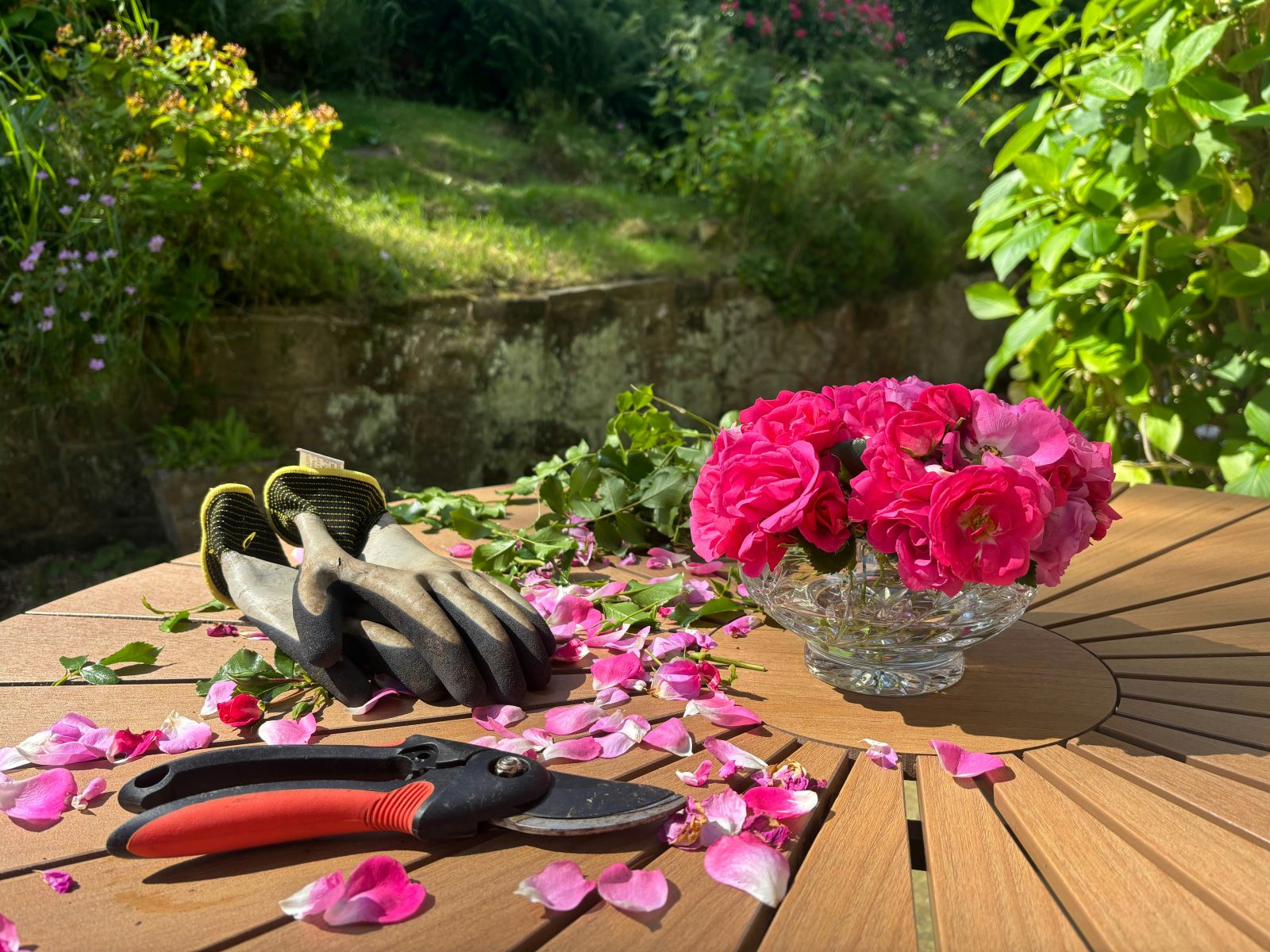

Pruning roses can feel intimidating, especially for beginners, but it’s one of the most important tasks for maintaining healthy, vibrant plants.
Done correctly, pruning encourages new growth, improves airflow, and enhances flowering.
Whether you’re tending to bush roses, climbers, or hybrid teas, learning how to prune properly will ensure your roses flourish year after year.
Why Prune Roses?
Pruning has several vital benefits.
It removes dead or diseased wood, which can harbour pests and fungi, and it opens up the plant to light and air, reducing the risk of black spot and mildew.
Pruning also shapes the rose, encourages more abundant blooms, and prevents it from becoming leggy or unmanageable.
When to Prune
In the UK, the best time to prune most roses is in late winter or early spring, typically from late February to early March, when the worst frosts have passed but before new growth begins.
However, always tailor this timing slightly depending on your local climate and the specific rose variety.
Climbing roses can benefit from pruning in two stages—lightly in late summer after flowering, then more thoroughly in winter or early spring. Ramblers, by contrast, should be pruned after flowering in late summer.
Tools You’ll Need
Before you begin, make sure you have clean, sharp tools.
A good pair of bypass secateurs is essential for precise cuts, while loppers or a pruning saw may be needed for thicker stems.
Always wear gloves to protect your hands from thorns, and consider eye protection if you’re tackling a large or sprawling plant.
Step-by-Step Pruning Guide
-
Remove dead, damaged, or diseased wood
Start by cutting out any blackened, shrivelled, or broken stems. Cut back to healthy wood, just above an outward-facing bud or a junction with a healthy branch. -
Cut out crossing or inward-growing stems
These can cause congestion and rubbing, which may lead to disease. Aim for an open-centred shape that allows sunlight and air to circulate freely. -
Shape and reduce height
Reduce the overall size of the rose by about a third to a half, depending on how vigorous it is. Always cut just above an outward-facing bud and make the cut at a 45-degree angle, sloping away from the bud. -
Thin older growth
In mature bushes, remove some of the oldest stems at the base to encourage new, more productive growth. This is especially important for floribunda and shrub roses. -
Clean up
Gather and dispose of all pruned material to prevent the spread of disease. Don’t compost diseased clippings.
Aftercare
Feed your roses with a balanced rose fertiliser in early spring after pruning, and apply a layer of well-rotted manure or compost as mulch around the base.
Water if the soil is dry.
Pruning roses is more of an art than a strict science.
Don’t be afraid to make cuts; roses are resilient and respond well to firm handling.
With each season, your confidence will grow—just like your roses. A well-pruned rose bush is not only healthier but also far more rewarding when it bursts into bloom.