

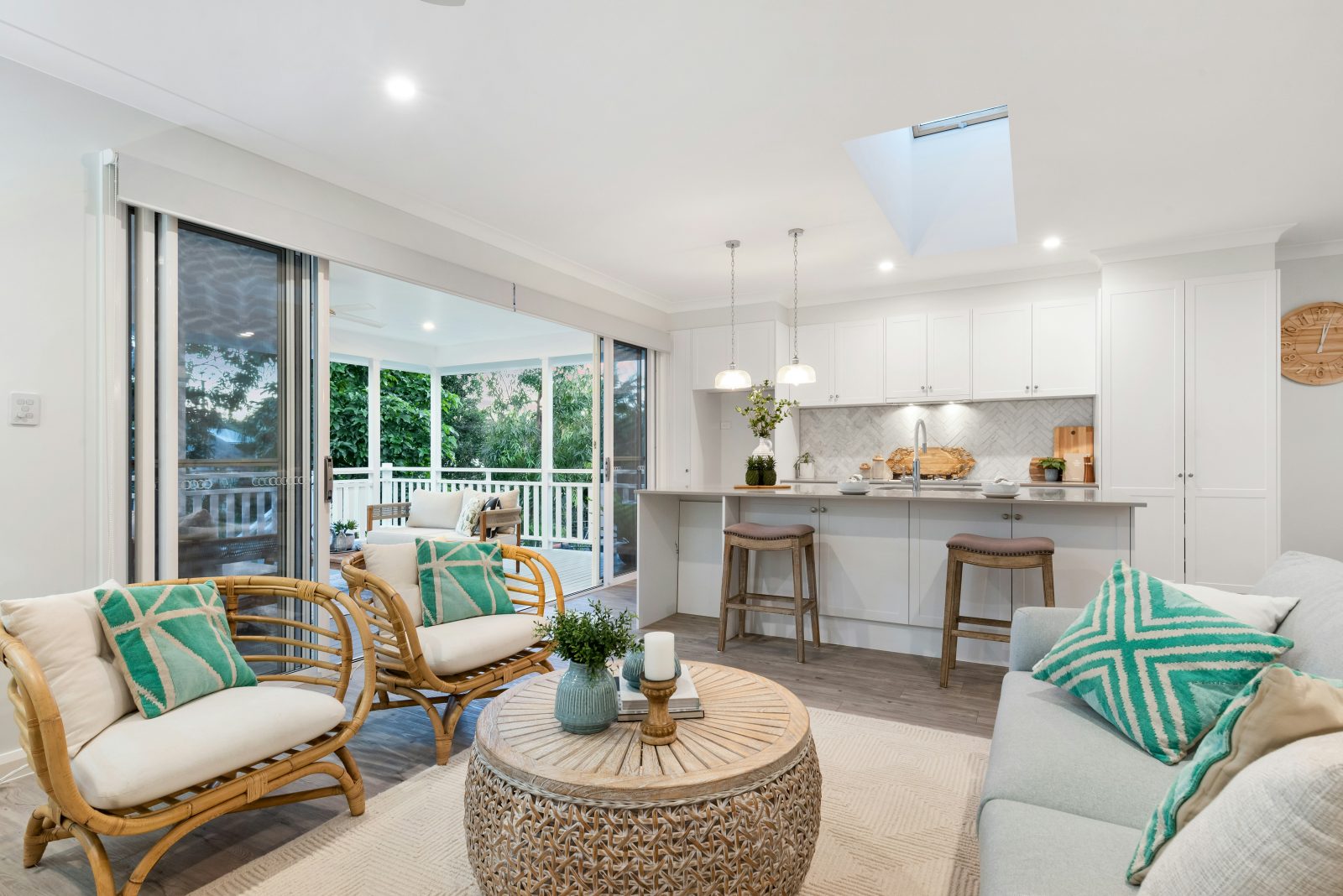

Open-plan living spaces that combine the kitchen and living room have become increasingly popular in modern homes.
They offer a sociable and versatile environment, ideal for both family life and entertaining.
However, styling such a multifunctional space requires thoughtful design to maintain flow, functionality, and aesthetic harmony.
Here’s how to style a kitchen/living room area effectively and make the most of your shared space.
1. Create Distinct Zones
Even though it’s an open space, it’s essential to define the kitchen and living areas.
Use visual cues to create zones—such as different flooring, area rugs, lighting, or changes in wall colour.
For example, wood or tile flooring in the kitchen can contrast with a cosy rug in the living space.
A large pendant light over the dining table and softer lighting in the lounge helps signal the shift in purpose from one zone to the next.
2. Unify with a Cohesive Colour Palette
While you want to distinguish the two areas, they must also feel part of a cohesive whole.
Use a consistent colour palette to link the kitchen and living room.
This doesn’t mean everything must match exactly, but echoing tones and accents across the two zones—through cushions, artwork, cabinetry, or accessories—will create a sense of unity.
Neutral bases with pops of colour tend to work well and are easy to update seasonally.
3. Focus on Functional Furniture
Furniture in an open-plan space needs to work hard.
Opt for pieces that are stylish yet practical, and not too bulky.
Consider modular or low-profile seating that won’t overwhelm the space.
A well-placed island or breakfast bar can act as both a food prep area and a casual dining spot, bridging the kitchen and living zones.
Make sure furniture placement encourages flow while subtly guiding people through the space.
4. Incorporate Smart Storage Solutions
Open spaces can quickly become cluttered if storage isn’t well planned.
Integrated cabinetry, floating shelves, and multifunctional furniture (such as ottomans with storage) can help keep the space tidy and calm.
In the kitchen, use pull-out drawers, vertical storage, and hidden cupboards to maximise space.
Keeping surfaces clear, particularly between the two areas, will help the room feel more spacious and organised.
5. Layer Texture and Lighting
Texture adds depth and warmth to a space, especially in rooms that serve multiple purposes.
Use a mix of materials—wood, metal, textiles, and ceramics—to bring character.
A fabric sofa, woven rug, and ceramic lampshades can soften the harder surfaces of a kitchen.
Lighting is also key: combine ambient, task, and accent lighting throughout the area to adapt to different moods and uses.
6. Add Personal Touches
Finally, don’t forget to add personality.
Plants, artwork, decorative objects, and family photos will make the space feel lived-in and loved.
Be intentional with placement to avoid clutter, and use wall space wisely for decorative or practical elements like shelving or statement clocks.
With thoughtful design and a balanced approach, a kitchen/living room area can become the vibrant heart of your home—both stylish and supremely liveable.